A map-first platform for off-plan real estate.
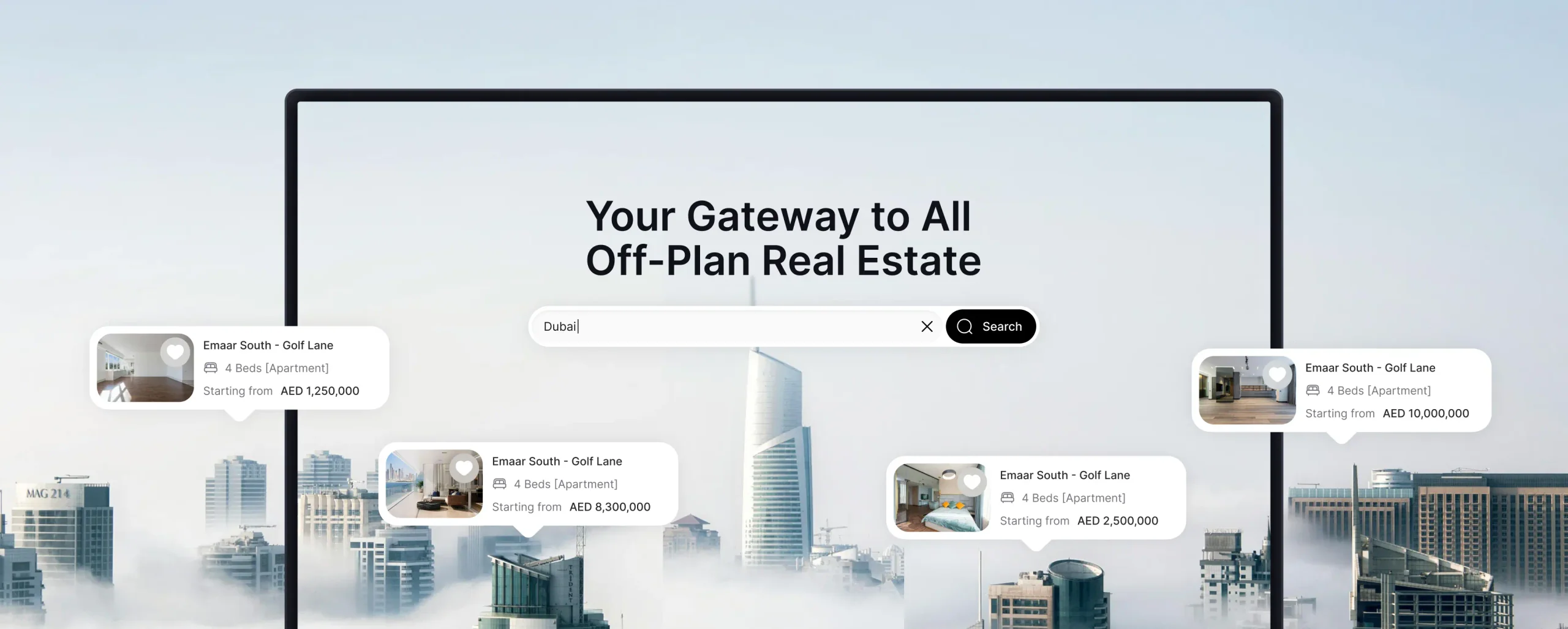
Homzly brings Dubai’s off-plan property discovery, comparison and investment data into one map-first experience for buyers, investors and real estate teams.

- Category
- PropTech / Investment platform
- Market
- Dubai / UAE off-plan real estate
- Team
- Product, Design, Engineering, QA
- Scope
- Web platform, mobile app, back-office
Project snapshot
From product definition to a production-ready real estate platform.
Homzly was built from the ground up over roughly seven months. We owned the full delivery cycle: product discovery, technical architecture, experience design, frontend and backend engineering, quality assurance, release and operational handover.
We delivered one connected ecosystem for public property discovery, mobile decision-making and internal inventory operations. Shared domain logic and platform services keep project, building, floor and unit data consistent across every surface.
Approach
One canonical property model connects the customer experience with the operational workflows that keep inventory, pricing, media and availability accurate.
01 / Context
A product for the complete off-plan property journey.
Buyers and investors need to explore locations, understand projects and compare opportunities with confidence. Agents and internal teams need reliable control over inventory, pricing, floor plans, media and availability. Homzly had to support both sides of the market without becoming a collection of disconnected tools.
02 / Engineering challenge
Make complex, changing inventory fast to search and safe to manage.
The central engineering challenge was to transform layered project, building, floor and unit data into responsive map search, detailed comparisons and dependable operational workflows—while keeping permissions, data quality and release safety under control.
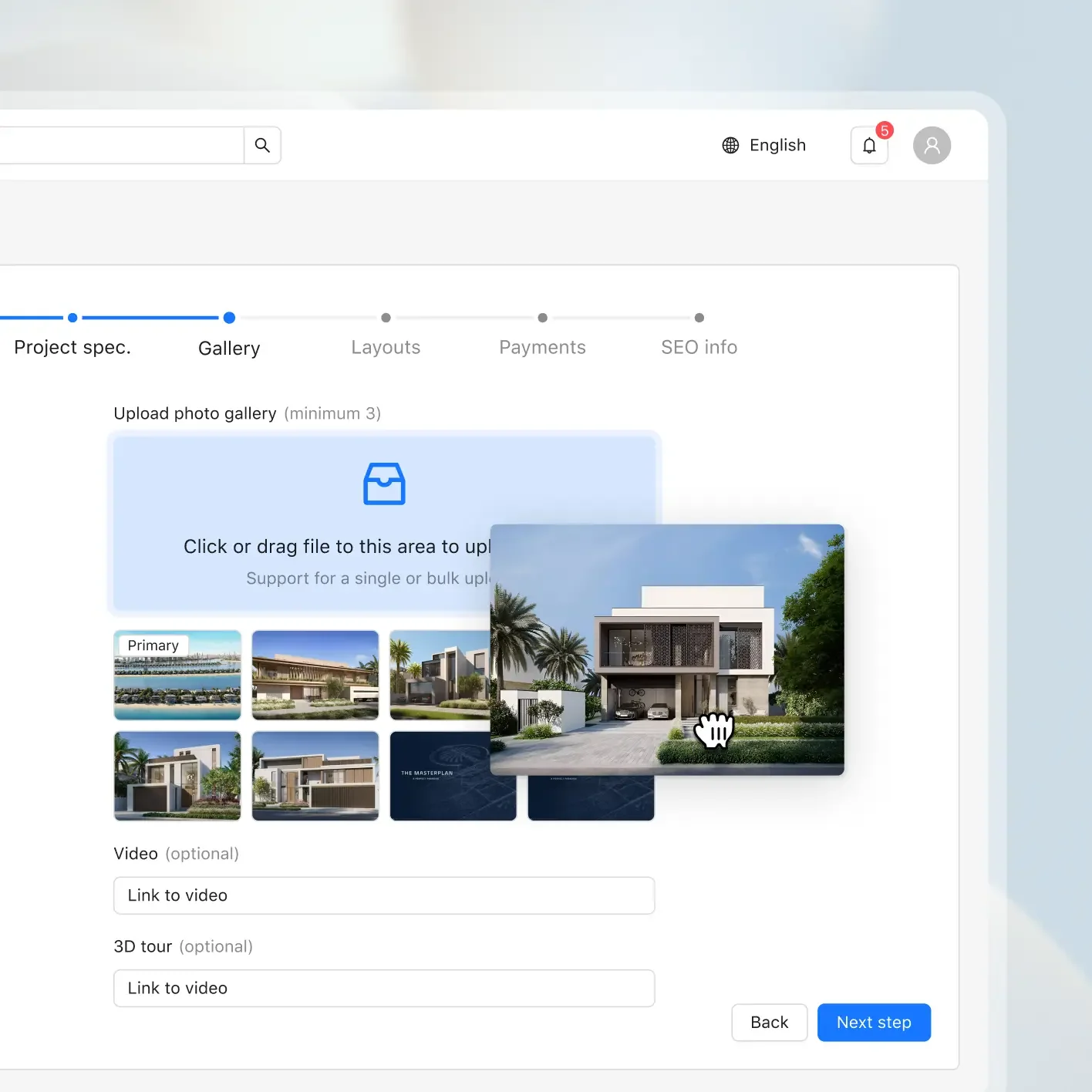

Full-cycle development
Five coordinated delivery streams turned a complex product ecosystem into one dependable platform.
Discovery and delivery blueprint
We aligned business goals, customer journeys and operational constraints; audited the available property data; defined the core domain model; and translated the roadmap into release increments with clear dependencies and acceptance criteria.
Architecture and data foundation
We designed a modular platform around property developers, projects, buildings, floors, units, pricing, availability and media. Typed API contracts and shared business rules allowed the web, mobile and back-office experiences to evolve in parallel without fragmenting the product.
Map, search and decision tools
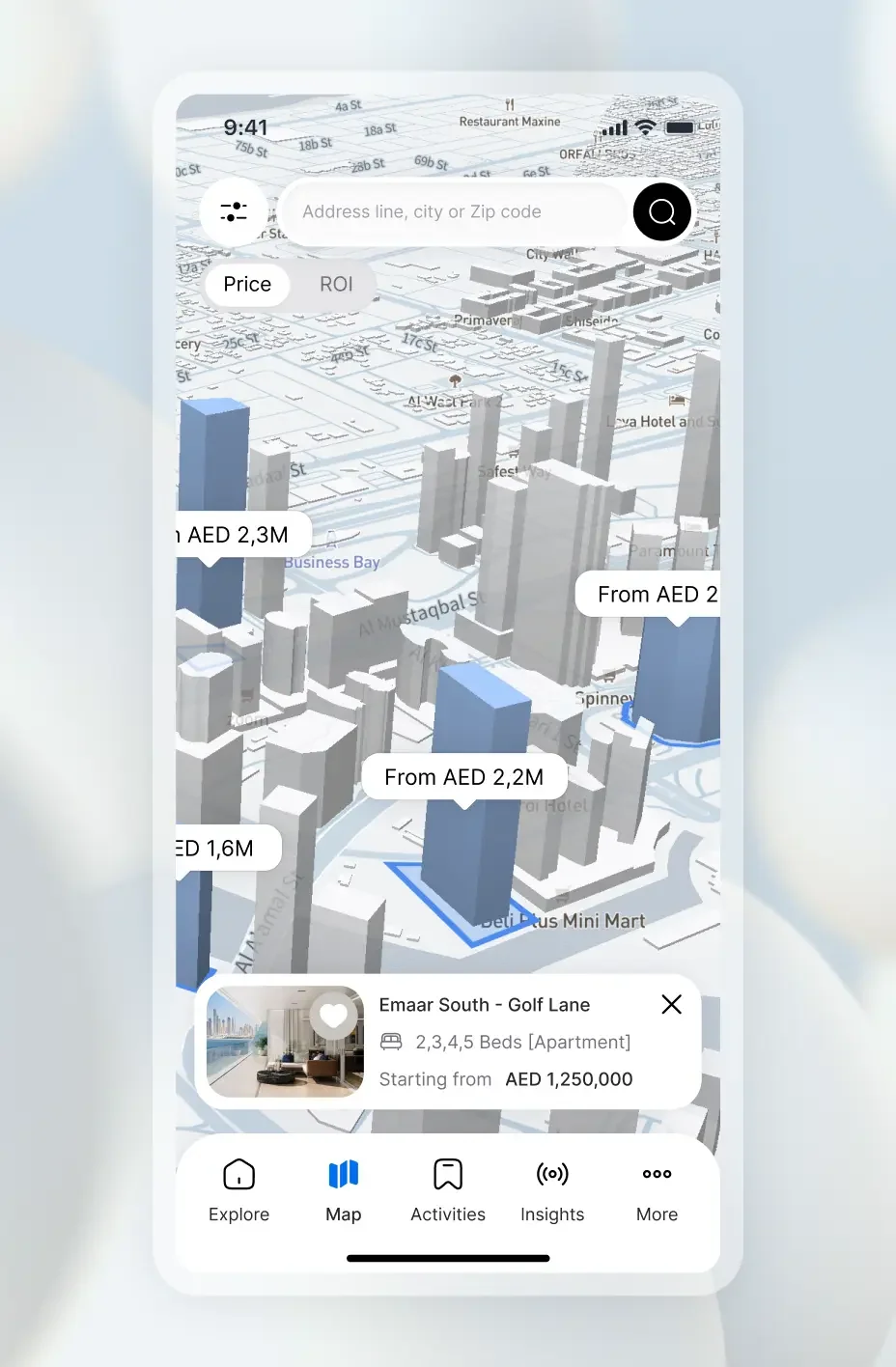
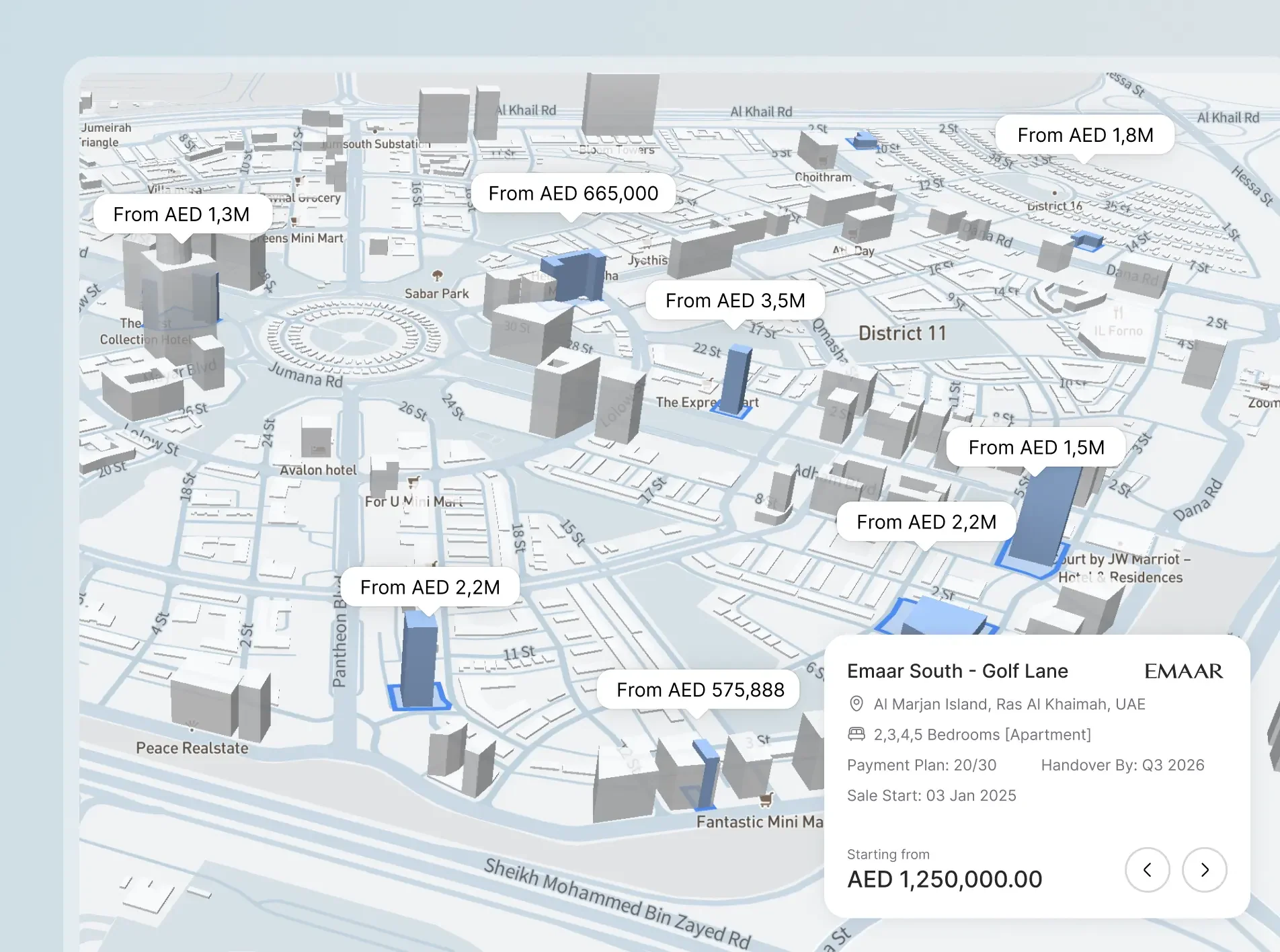
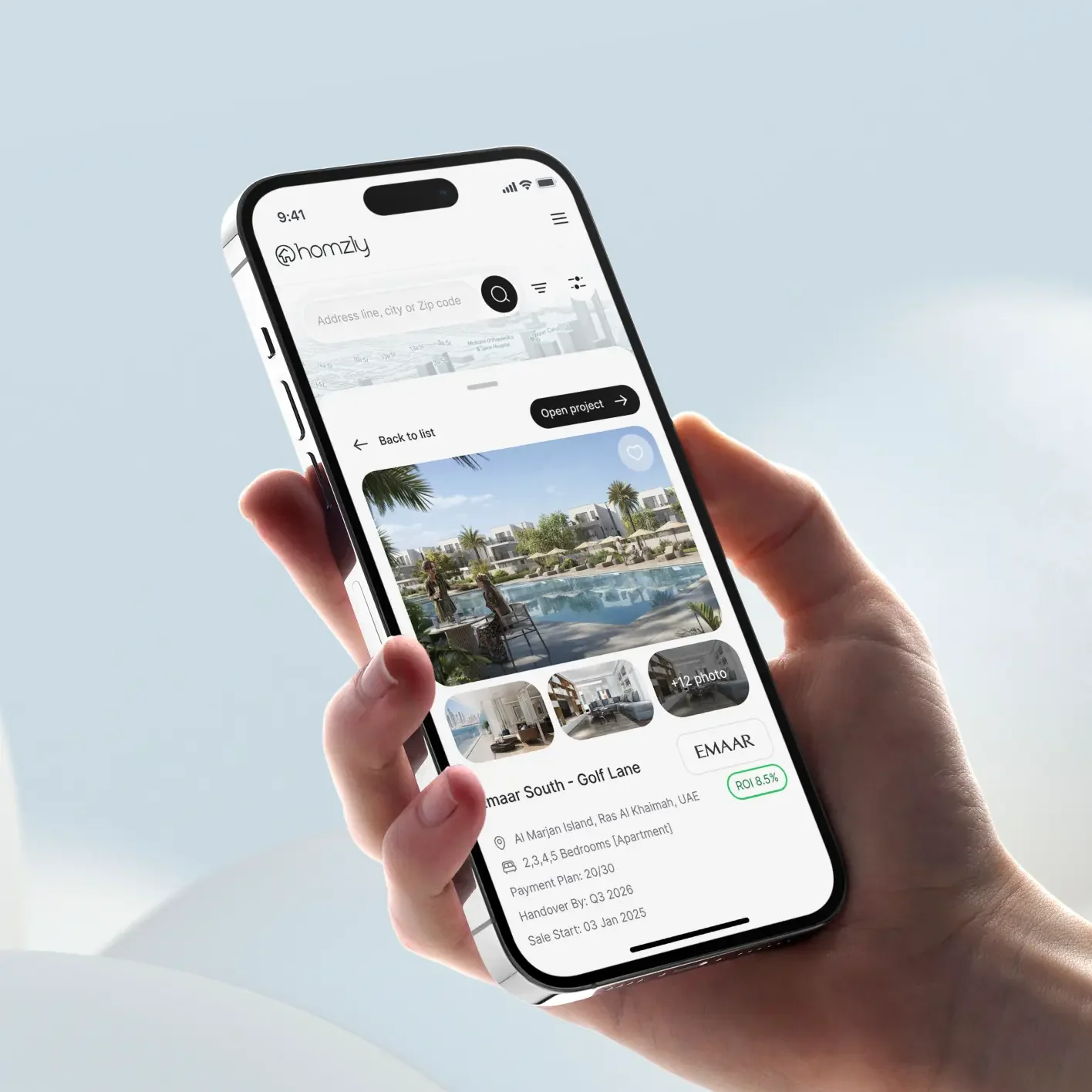
Geospatial search, indexed filters and progressive result loading power the map-first discovery flow. Project pages, unit-level detail, comparison tools and investment calculations turn search results into a decision-ready experience.
Data pipelines and back-office
Import, validation, enrichment, media processing and publishing workflows transform source data into structured inventory. Role-based tools let teams review and maintain project records, floor plans, prices, availability and 3D assets before updates reach customers.
QA, release and observability
Automated unit, integration and end-to-end tests were paired with cross-device testing and staged release checks. Continuous delivery, structured logs, error tracking, metrics and alerts provide visibility from deployment through live operation.
Connected product
One platform across discovery, evaluation and daily operations.
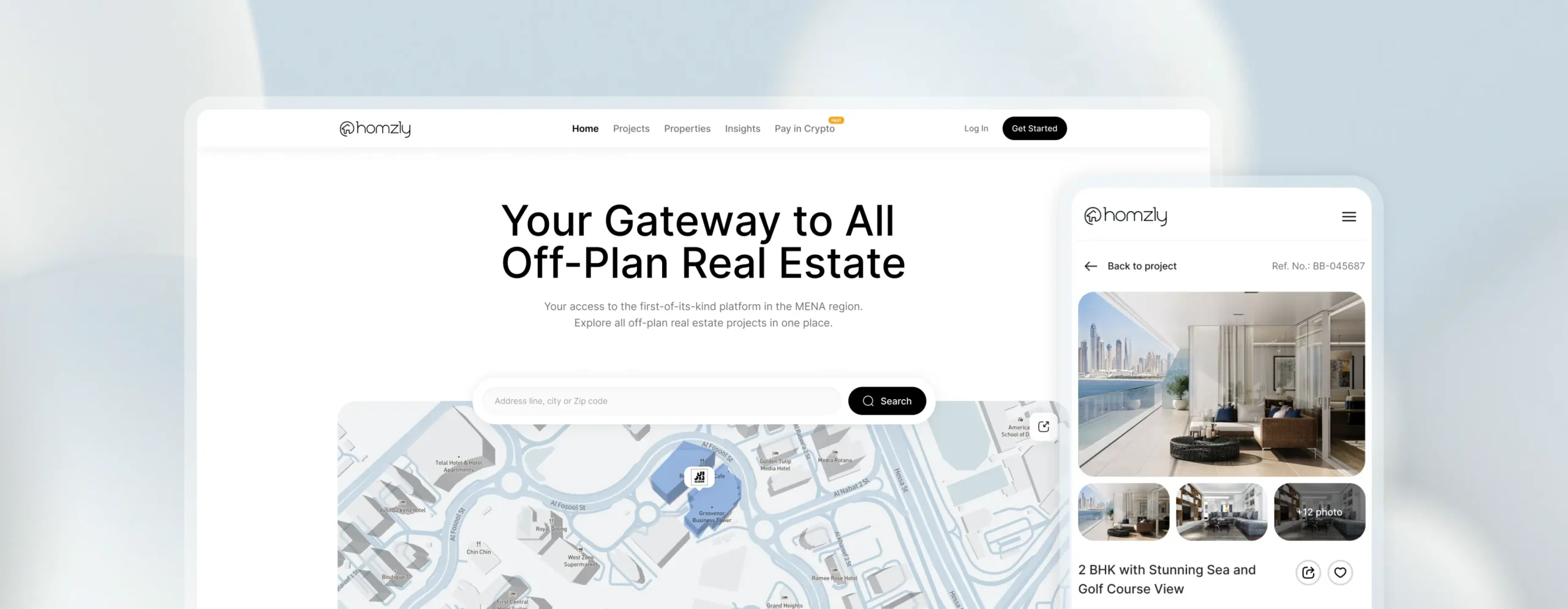
The public web experience supports broad market research, while the mobile app keeps saved projects and investment details close at hand. The back-office provides the operational tools behind both experiences. Every surface uses the same data contracts and business rules, allowing users to move from city-level exploration to a project, building, floor and individual unit without losing context.
Technology
A stack built for geospatial discovery, data-rich interfaces and dependable delivery.
The experience layer uses Next.js, React and TypeScript on the web, with React Native for iOS and Android. A service layer built with Node.js and NestJS exposes documented APIs and asynchronous jobs. PostgreSQL and PostGIS provide the source of truth for inventory and location data; Redis supports caching and queues; and OpenSearch powers fast faceted discovery.
Mapbox handles spatial interaction, while object storage and a CDN deliver imagery, floor plans and 3D assets efficiently. Dockerized environments, automated CI/CD, Playwright, Sentry and OpenTelemetry make releases repeatable and production behaviour observable.
- Web
- Next.js · React · TypeScript
- Mobile
- React Native · iOS · Android
- Backend
- Node.js · NestJS · REST / OpenAPI
- Data and search
- PostgreSQL · PostGIS · Redis · OpenSearch
- Maps and media
- Mapbox · Object storage · CDN
- Delivery and quality
- Docker · CI/CD · Playwright · Sentry · OpenTelemetry
The result
A production foundation for Homzly’s off-plan real estate business.
The delivered product combines a public web platform, mobile experience, map-based discovery, project and unit comparison, investment and ROI views, and a back-office for managing the underlying real estate data. Following handover, the platform entered live use with the architecture, delivery workflow and operational tooling the internal team needed to run and extend it.